Introduction
As cloud adoption matures, Java teams are facing a new challenge. While infrastructure is more powerful and flexible than ever, developers are often slowed down by fragmented tooling, inconsistent environments, and operational complexity. Simply “using the cloud” is no longer enough.
This is where Platform Engineering comes into play.
For Java-centric cloud teams, platform engineering is not about adding more abstraction layers. It is about removing friction—giving developers a reliable, self-service platform that allows them to focus on writing business logic while the platform handles consistency, security, and scalability.
In this article, we’ll explore the core principles of platform engineering, why it matters specifically for Java teams, and how to design a platform that accelerates development without sacrificing control.
What Is Platform Engineering?
Platform engineering is the discipline of designing, building, and maintaining an internal developer platform (IDP) that standardizes how applications are built, deployed, and operated.
Instead of every Java team solving the same problems repeatedly—CI pipelines, containerization, observability, security, and cloud configuration—a platform team provides reusable, opinionated building blocks.
The goal is not to limit developers, but to:
-
Reduce cognitive load
-
Improve developer experience (DevEx)
-
Enforce best practices by default
-
Enable faster and safer delivery
Why Platform Engineering Matters for Java Teams
Java ecosystems are powerful, but they can also be complex. Spring Boot versions, JVM tuning, dependency management, container memory limits, and cloud networking are common sources of production issues.
Platform engineering helps Java teams by:
-
Standardizing runtime configurations (JVM, GC, memory)
-
Providing pre-configured templates for microservices
-
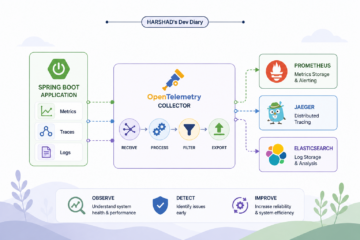
Enforcing consistent logging, metrics, and tracing
-
Reducing onboarding time for new developers
-
Eliminating “works on my machine” problems
For large or fast-growing teams, these benefits quickly compound.
Core Building Blocks of a Java-Friendly Internal Platform
1. Golden Paths for Java Applications
A “golden path” is a recommended way to build and deploy services, not a rigid rulebook.
For Java teams, this often includes:
-
Spring Boot starter templates
-
Standard Maven or Gradle configurations
-
Pre-configured Dockerfiles optimized for JVM containers
-
Built-in health checks and actuator endpoints
Golden paths reduce decision fatigue while still allowing teams to customize when needed.
2. Containerization and JVM Optimization
Running Java in containers requires deliberate tuning.
A good platform abstracts this complexity by:
-
Setting container-aware JVM flags
-
Aligning heap sizing with container limits
-
Providing base images with patched JDKs
-
Handling startup and memory performance consistently
This ensures predictable behavior across environments, from development to production.
3. Self-Service CI/CD Pipelines
Java developers should not need to understand pipeline internals to ship code.
A platform-managed CI/CD setup typically offers:
-
One-click pipeline onboarding
-
Automated builds, tests, and security scans
-
Environment promotion strategies
-
Rollback and deployment verification
Self-service pipelines empower teams while maintaining governance.
4. Infrastructure as Code (IaC) by Default
Manual infrastructure changes do not scale.
Platform teams usually define:
-
Reusable infrastructure modules
-
Environment templates for dev, staging, and production
-
Automated provisioning with built-in guardrails
For Java teams, this means infrastructure becomes predictable and repeatable, without requiring deep cloud expertise.
5. Observability as a Built-In Feature
Observability should never be an afterthought.
A strong platform provides:
-
Standard logging formats
-
Distributed tracing enabled by default
-
JVM and application metrics out of the box
-
Centralized dashboards for services
Developers gain visibility without additional setup, making debugging faster and more reliable.
6. Security Embedded into the Platform
Security is most effective when it is invisible to developers.
Platform engineering enables:
-
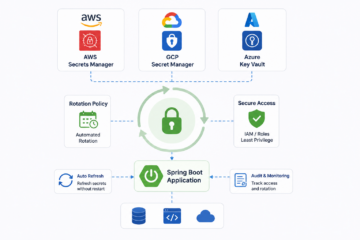
Secure secrets management
-
Automated dependency vulnerability scanning
-
Network policies and identity-based access
-
Secure defaults for APIs and services
This shifts security left without slowing development.
Platform Engineering vs DevOps: Clarifying the Difference
DevOps focuses on collaboration and culture between development and operations.
Platform engineering focuses on productizing that collaboration into a reusable platform.
In practice:
-
DevOps defines how teams work together
-
Platform engineering defines what tools and workflows they use
Both are complementary, not competing approaches.
Common Pitfalls to Avoid
Even well-intentioned platform efforts can fail if:
-
The platform becomes too rigid
-
Developers are forced into one-size-fits-all solutions
-
Feedback loops are ignored
-
The platform team builds in isolation
Successful platforms evolve continuously and treat developers as customers.
Measuring Platform Success
Platform engineering success is not measured by tools deployed, but by outcomes:
-
Reduced deployment frequency bottlenecks
-
Faster onboarding time
-
Lower production incident rates
-
Improved developer satisfaction
-
Consistent delivery across teams
Metrics tied to developer productivity are the most meaningful indicators.
Final Thoughts
For Java-centric cloud teams, platform engineering is no longer optional. As systems scale, so does complexity—and unmanaged complexity slows innovation.
A well-designed internal platform enables Java developers to move faster, write cleaner code, and operate confidently in the cloud. When done right, platform engineering becomes a force multiplier that turns cloud infrastructure into a true competitive advantage.

0 Comments