REST vs GraphQL in Java: Which API Style Suits Your Backend?

REST vs GraphQL in Java: Which API Style Suits Your Backend?

APIs form the backbone of modern software systems. Whether you’re building a monolithic application or distributed microservices, choosing the right API style can significantly affect maintainability, scalability, and development velocity. Among the leading approaches are REST and GraphQL, each with distinct strengths and trade-offs. In this blog, we’ll explore the Read more

Managing Secrets and Configurations in Spring Boot Using Vault or AWS Secrets Manager

Managing Secrets and Configurations in Spring Boot Using Vault or AWS Secrets Manager

In modern cloud-native applications, managing secrets such as API keys, database credentials, and configuration properties securely is critical. Hardcoding secrets or storing them in plain text config files is risky and violates best practices for security and compliance. This post explores how to securely manage secrets in Spring Boot applications Read more

A Guide to Resilience4j in Spring Boot for Fault-Tolerant Systems

A Guide to Resilience4j in Spring Boot for Fault-Tolerant Systems

Modern distributed systems must be resilient in the face of network failures, service downtime, and unpredictable latencies. As microservices architecture becomes the standard, building systems that can gracefully handle such failures is not just a feature—it’s a requirement. Resilience4j, a lightweight fault-tolerance library inspired by Netflix Hystrix, is designed for Read more

Building Event-Driven Architectures Using Spring Boot and Kafka

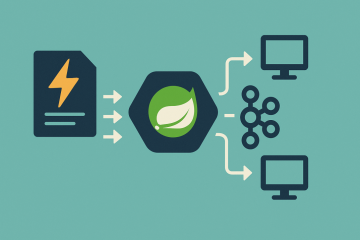
Building Event-Driven Architectures Using Spring Boot and Kafka

As applications scale in complexity and volume, traditional request-response models often fall short in terms of responsiveness, decoupling, and scalability. Event-driven architecture (EDA) has emerged as a powerful paradigm to address these challenges, enabling reactive, resilient, and loosely coupled systems. In this blog, we will explore how to build event-driven Read more

Benchmarking Java Code: Profiling and Performance Measurement Tools

Benchmarking Java Code: Profiling and Performance Measurement Tools

When developing high-performance Java applications, it’s not enough for the code to work—it must also work efficiently. Identifying performance bottlenecks, optimizing memory usage, and reducing response times are all key to delivering robust, scalable systems. This is where benchmarking and profiling tools come in. In this post, we’ll explore what Read more

Functional Interfaces and Lambda Expressions: Mastering Java's Functional Side

Functional Interfaces and Lambda Expressions: Mastering Java’s Functional Side

Since the release of Java 8, the language has undergone a major shift towards functional programming. Two of the most important features that enable this transition are functional interfaces and lambda expressions. These features allow developers to write cleaner, more concise, and expressive code. In this post, we’ll cover: What Read more

Understanding the Java Module System (JPMS) in Modern Applications

Understanding the Java Module System (JPMS) in Modern Applications

With the release of Java 9, the Java Platform introduced a significant architectural shift: the Java Platform Module System (JPMS). While backward compatibility remains intact, JPMS enables developers to write better organized, secure, and scalable applications. In this blog post, we will explore: Why JPMS Was Introduced Before Java 9, Read more