Implementing Cost-Aware Architecture on AWS: Tagging, Budgets, and Rightsizing

Implementing Cost-Aware Architecture on AWS: Tagging, Budgets, and Rightsizing

Managing cloud cost efficiency is no longer optional—it is a core architectural responsibility. As organizations move deeper into AWS, the focus shifts from simply deploying infrastructure to doing so in a cost-efficient, predictable, and measurable way. Cost-aware architecture ensures that engineering teams maintain visibility, accountability, and control over spending without Read more

Infrastructure as Code with Terraform: A Practical Guide for Java Developers

Monitoring Java Applications with Prometheus and Grafana on Kubernetes

Introduction Modern microservices-based architectures rely heavily on observability to ensure applications perform reliably at scale.For Java applications running on Kubernetes, Prometheus and Grafana are the standard tools for monitoring and visualization. Together, they offer a flexible system for collecting, storing, and analyzing metrics — allowing developers to detect issues before Read more

Infrastructure as Code with Terraform: A Practical Guide for Java Developers

Infrastructure as Code with Terraform: A Practical Guide for Java Developers

Introduction Infrastructure as Code (IaC) has transformed the way software is delivered. Instead of manually configuring servers and cloud services, developers can define their infrastructure in version‑controlled code, which makes deployments consistent, repeatable and auditable. Java developers, who often work on complex enterprise systems, can benefit tremendously from adopting IaC Read more

Role of Service Discovery in Microservices and How to Implement It with Eureka & Consul

Role of Service Discovery in Microservices and How to Implement It with Eureka & Consul

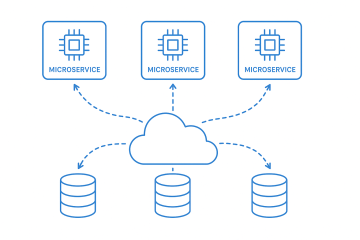
Introduction In modern cloud-native architectures, microservices have become the preferred style for building scalable, resilient, and independently deployable applications. However, this architectural model introduces dynamism and distribution: services may scale up or down, move between hosts or containers, and network addresses may change. In this context, service discovery emerges as Read more

Zero Downtime Deployments in Microservices: Blue/Green and Canary Strategies

Zero Downtime Deployments in Microservices: Blue/Green and Canary Strategies

Introduction In today’s fast‑moving digital world, microservices architectures demand frequent updates without interrupting service availability. Zero downtime deployments are essential for mission‑critical systems—such as banking, e‑commerce, and high‑traffic consumer apps—to ensure customer trust and operational resilience. This article explores two established strategies—Blue/Green and Canary deployments—along with technical considerations, pipeline integration, Read more

How to Handle Schema Evolution in Microservices Communication

How to Handle Schema Evolution in Microservices Communication

In microservices architecture, services often evolve independently. Over time, this leads to changes in data contracts—commonly referred to as schema evolution. If not handled carefully, even minor schema changes can break inter-service communication, leading to data loss, runtime errors, or system outages. This article explores how to safely manage schema Read more

Implementing Distributed Tracing with OpenTelemetry in Java Microservices

Implementing Distributed Tracing with OpenTelemetry in Java Microservices

As microservices scale in complexity, debugging issues across multiple services becomes increasingly difficult. Traditional logging falls short when tracking a request across boundaries. This is where distributed tracing plays a crucial role. In this blog, we’ll explore how to implement distributed tracing in Java microservices using OpenTelemetry, an open-source observability Read more

Building Multi-Tenant Applications with Spring Boot

Building Multi-Tenant Applications with Spring Boot

As businesses scale and serve multiple customers, building multi-tenant applications becomes a core architectural need. A multi-tenant application is designed to serve more than one client (tenant), while maintaining data isolation, security, and performance efficiency. In this blog, we explore the strategies and implementation techniques to build multi-tenant applications using Read more

REST vs GraphQL in Java: Which API Style Suits Your Backend?

REST vs GraphQL in Java: Which API Style Suits Your Backend?

APIs form the backbone of modern software systems. Whether you’re building a monolithic application or distributed microservices, choosing the right API style can significantly affect maintainability, scalability, and development velocity. Among the leading approaches are REST and GraphQL, each with distinct strengths and trade-offs. In this blog, we’ll explore the Read more

Managing Secrets and Configurations in Spring Boot Using Vault or AWS Secrets Manager

Managing Secrets and Configurations in Spring Boot Using Vault or AWS Secrets Manager

In modern cloud-native applications, managing secrets such as API keys, database credentials, and configuration properties securely is critical. Hardcoding secrets or storing them in plain text config files is risky and violates best practices for security and compliance. This post explores how to securely manage secrets in Spring Boot applications Read more