site logo

HARSHAD's Dev Diary

Mastering Asynchronous Programming in Java with CompletableFuture
Java, Concurrency, Asynchronous Programming, Backend Development

Mastering Asynchronous Programming in Java with CompletableFuture

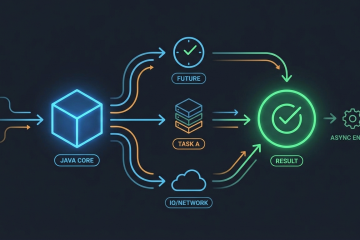
Modern applications are expected to be fast, responsive, and capable of handling multiple operations concurrently. In Java, traditional multithreading using Thread, Runnable, and ExecutorService often leads to verbose code, complex error handling, and difficult-to-maintain logic. This is where CompletableFuture, introduced Read more

By HS, 4 monthsMarch 14, 2026 ago
Advanced Java Collections: Internal Implementations and Performance Tricks
Java, JVM Internals, Performance Engineering, Backend Development

Advanced Java Collections: Internal Implementations and Performance Tricks

Introduction Java Collections are among the most frequently used APIs in enterprise applications. From request handling and caching to data processing and concurrency, collections sit at the heart of nearly every Java system. Yet, many performance issues in production systems Read more

By HS, 5 monthsMarch 7, 2026 ago
How to Build High-Performance APIs in Java Using gRPC
Java, Spring Boot, AWS, Microservices

How to Build High-Performance APIs in Java Using gRPC

Introduction As modern systems scale, traditional REST-based APIs often begin to show limitations—especially in latency-sensitive and high-throughput environments. JSON serialization overhead, verbose payloads, and HTTP/1.1 constraints can become bottlenecks in distributed systems. This is where gRPC stands out. gRPC is Read more

By HS, 5 monthsFebruary 28, 2026 ago
JVM Internals Explained: Class Loaders, Bytecode, and Execution Engine
Java, Spring Boot, AWS, Microservices

JVM Internals Explained: Class Loaders, Bytecode, and Execution Engine

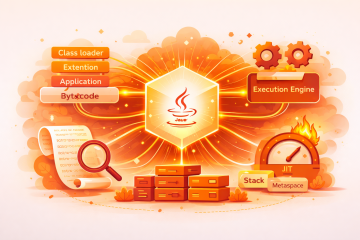
Introduction One of Java’s greatest strengths is its promise of “write once, run anywhere.” Behind this promise lies the Java Virtual Machine (JVM)—a sophisticated runtime that abstracts hardware, manages memory, executes bytecode, and optimizes performance dynamically. Many Java developers use Read more

By HS, 5 monthsFebruary 21, 2026 ago
Understanding Virtual Threads in Java (Project Loom) for High Concurrency Systems
Java, Spring Boot, AWS, Microservices

Understanding Virtual Threads in Java (Project Loom) for High Concurrency Systems

Introduction High concurrency has always been one of Java’s strongest use cases—and one of its toughest challenges. For years, Java developers have relied on thread pools, asynchronous frameworks, and reactive programming models to scale systems efficiently. While these approaches work, Read more

By HS, 5 monthsFebruary 14, 2026 ago
Platform Engineering Essentials for Java-Centric Cloud Teams
Java, Spring Boot, AWS, Microservices

Platform Engineering Essentials for Java-Centric Cloud Teams

Introduction As cloud adoption matures, Java teams are facing a new challenge. While infrastructure is more powerful and flexible than ever, developers are often slowed down by fragmented tooling, inconsistent environments, and operational complexity. Simply “using the cloud” is no Read more

By HS, 5 monthsFebruary 7, 2026 ago
Architecting Java Applications for Edge and IoT Deployments
Java, Spring Boot, AWS, Microservices

Architecting Java Applications for Edge and IoT Deployments

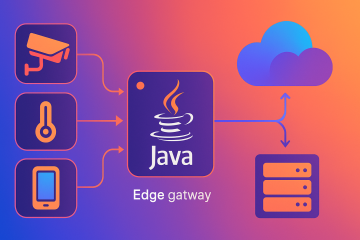
The rapid rise of Internet of Things (IoT) devices and real-time processing demands has shifted computation closer to the data source — at the edge. Java, with its strong ecosystem, platform independence, and mature tooling, continues to be a powerful Read more

By HS, 6 monthsJanuary 31, 2026 ago
Choosing the Right Cloud Database: RDS, DynamoDB, Aurora, or DocumentDB?
Java, Spring Boot, AWS, Microservices

Choosing the Right Cloud Database: RDS, DynamoDB, Aurora, or DocumentDB?

Choosing the right database service is one of the most critical decisions when designing a cloud-native application. AWS offers a variety of purpose-built databases that cater to different performance, scalability, cost, and operational requirements. Among the most widely adopted options Read more

By HS, 6 monthsJanuary 24, 2026 ago
Eventual Consistency in Distributed Java Systems: Patterns and Pitfalls
Java, Spring Boot, AWS, Microservices

Eventual Consistency in Distributed Java Systems: Patterns and Pitfalls

Building modern applications inevitably means distributing components across multiple services and data stores. With microservices, cloud-native architectures, and globally distributed systems, strong consistency becomes difficult and expensive to maintain at scale. This is where eventual consistency emerges as a practical Read more

By HS, 6 monthsJanuary 17, 2026 ago
How to Perform Technical Debt Assessment in Legacy Java Systems
Java, Spring Boot, AWS, Microservices

How to Perform Technical Debt Assessment in Legacy Java Systems

Legacy Java systems often represent years of enhancements, quick fixes, shifting business priorities, and evolving technology stacks. While these systems continue to deliver critical value, they also accumulate technical debt — making development slower, riskier, and expensive over time. A Read more

By HS, 6 monthsJanuary 10, 2026 ago

Posts pagination

Previous 1 2 3 … 7 Next
Hestia | Developed by ThemeIsle
site logo
Manage Consent
To provide the best experiences, we use technologies like cookies to store and/or access device information. Consenting to these technologies will allow us to process data such as browsing behavior or unique IDs on this site. Not consenting or withdrawing consent, may adversely affect certain features and functions.
Functional Always active
The technical storage or access is strictly necessary for the legitimate purpose of enabling the use of a specific service explicitly requested by the subscriber or user, or for the sole purpose of carrying out the transmission of a communication over an electronic communications network.
Preferences
The technical storage or access is necessary for the legitimate purpose of storing preferences that are not requested by the subscriber or user.
Statistics
The technical storage or access that is used exclusively for statistical purposes. The technical storage or access that is used exclusively for anonymous statistical purposes. Without a subpoena, voluntary compliance on the part of your Internet Service Provider, or additional records from a third party, information stored or retrieved for this purpose alone cannot usually be used to identify you.
Marketing
The technical storage or access is required to create user profiles to send advertising, or to track the user on a website or across several websites for similar marketing purposes.
  • Manage options
  • Manage services
  • Manage {vendor_count} vendors
  • Read more about these purposes
View preferences
  • {title}
  • {title}
  • {title}