site logo

HARSHAD's Dev Diary

Understanding the Java Module System (JPMS) in Modern Applications
Java Development, Software Architecture, Backend Engineering

Understanding the Java Module System (JPMS) in Modern Applications

With the release of Java 9, the Java Platform introduced a significant architectural shift: the Java Platform Module System (JPMS). While backward compatibility remains intact, JPMS enables developers to write better organized, secure, and scalable applications. In this blog post, Read more

By HS, 10 monthsJuly 26, 2025 ago
Java Memory Management Deep Dive: Heap, GC, and Best Practices
Java, Spring Boot, AWS, Microservices

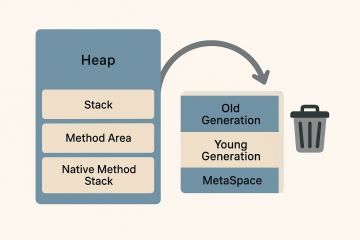
Java Memory Management Deep Dive: Heap, GC, and Best Practices

Managing memory effectively is at the core of writing performant and scalable Java applications. Whether you’re tuning JVM settings, debugging OutOfMemoryErrors, or simply trying to understand how Java handles objects behind the scenes, having a solid grasp on memory management Read more

By HS, 11 monthsJuly 19, 2025 ago
Best Practices for Debugging & Troubleshooting Java Applications
Java, Spring Boot, AWS, Microservices

Best Practices for Debugging & Troubleshooting Java Applications

Introduction Even the most experienced Java developers encounter bugs and runtime issues. Debugging and troubleshooting are critical skills for identifying root causes, resolving issues efficiently, and maintaining application health. Whether you’re fixing a null pointer exception, tracking down memory leaks, Read more

By HS, 11 monthsJuly 12, 2025 ago
How to Become a Cloud Architect from a Java Developer
Cloud Computing, Serverless, Technology Trends

How to Become a Cloud Architect from a Java Developer

Introduction Transitioning from a Java developer to a cloud architect is a logical and rewarding career move, especially in today’s cloud-first world. With the proliferation of cloud platforms and the increasing complexity of distributed systems, the role of a cloud Read more

By HS, 11 monthsJuly 5, 2025 ago
Comparing SQL vs. NoSQL Databases for Java Backend Applications
Java, Spring Boot, AWS, Microservices

Comparing SQL vs. NoSQL Databases for Java Backend Applications

Introduction Choosing the right database for your Java backend application is a crucial architectural decision that impacts scalability, performance, data consistency, and future flexibility. SQL (relational) and NoSQL (non-relational) databases serve different use cases and understanding their characteristics is essential Read more

By HS, 11 monthsJune 28, 2025 ago
How to Optimize Database Performance in Spring Boot Applications
Java, Spring Boot, AWS, Microservices

How to Optimize Database Performance in Spring Boot Applications

Introduction Database performance is critical to the overall speed and scalability of Spring Boot applications. As applications grow in complexity and user base, ensuring efficient data access becomes essential to delivering low-latency responses and preventing system bottlenecks. In this blog, Read more

By HS, 12 monthsJune 21, 2025 ago
How to Reduce Cloud Costs for Your Java Applications
Java, Spring Boot, AWS, Microservices

How to Reduce Cloud Costs for Your Java Applications

Introduction Java applications are widely used in enterprises due to their robustness, scalability, and extensive ecosystem. However, when deployed in cloud environments, they can incur significant costs if not optimized properly. Understanding how to manage and reduce cloud spending is Read more

By HS, 12 monthsJune 14, 2025 ago
Serverless Architecture: Is It the Future of Cloud Computing?
Cloud Computing, Serverless, Technology Trends

Serverless Architecture: Is It the Future of Cloud Computing?

Introduction Cloud computing has continuously evolved, reshaping the way applications are designed, developed, and deployed. Among the latest innovations, serverless architecture stands out, promising developers more agility, scalability, and cost-efficiency. But is serverless truly the future of cloud computing? Let’s Read more

By HS, 12 monthsJune 7, 2025 ago
CI/CD Pipeline for Java Applications with Jenkins & AWS CodePipeline
Java, Spring Boot, AWS, Microservices

Building a CI/CD Pipeline for Java Applications with Jenkins and AWS CodePipeline

Building a CI/CD Pipeline for Java Applications with Jenkins and AWS CodePipeline Continuous Integration and Continuous Deployment (CI/CD) are essential for delivering software reliably and rapidly. In this guide, we’ll build a professional CI/CD pipeline for a Java application using Jenkins and AWS Read more

By HS, 1 yearMay 31, 2025 ago
Java, Spring Boot, AWS, Cloud

Understanding Kubernetes for Java Developers

Introduction In today’s cloud-native world, container orchestration has become an essential skill for developers, especially Java developers working on microservices and scalable backend systems. Kubernetes is the de facto standard for container orchestration, enabling teams to automate deployment, scaling, and Read more

By HS, 1 yearMay 24, 2025 ago

Posts pagination

Previous 1 … 4 5 6 7 Next
Hestia | Developed by ThemeIsle
site logo
Manage Consent
To provide the best experiences, we use technologies like cookies to store and/or access device information. Consenting to these technologies will allow us to process data such as browsing behavior or unique IDs on this site. Not consenting or withdrawing consent, may adversely affect certain features and functions.
Functional Always active
The technical storage or access is strictly necessary for the legitimate purpose of enabling the use of a specific service explicitly requested by the subscriber or user, or for the sole purpose of carrying out the transmission of a communication over an electronic communications network.
Preferences
The technical storage or access is necessary for the legitimate purpose of storing preferences that are not requested by the subscriber or user.
Statistics
The technical storage or access that is used exclusively for statistical purposes. The technical storage or access that is used exclusively for anonymous statistical purposes. Without a subpoena, voluntary compliance on the part of your Internet Service Provider, or additional records from a third party, information stored or retrieved for this purpose alone cannot usually be used to identify you.
Marketing
The technical storage or access is required to create user profiles to send advertising, or to track the user on a website or across several websites for similar marketing purposes.
  • Manage options
  • Manage services
  • Manage {vendor_count} vendors
  • Read more about these purposes
View preferences
  • {title}
  • {title}
  • {title}