In today’s world of real-time systems, traditional architectures often fail to meet the demands of ultra-low latency and high throughput. Whether you’re building trading platforms, telemetry pipelines, or high-scale APIs, the ability to process millions of events per second is no longer optional.
This is where the Disruptor pattern, popularized by the LMAX Exchange, becomes a powerful solution.
Let’s explore how to design high-throughput event-driven systems using Java and the Disruptor.
Understanding the Limitations of Traditional Queues
Most Java applications rely on:
- Blocking queues (
ArrayBlockingQueue,LinkedBlockingQueue) - Thread pools with producer-consumer models
While these are easy to implement, they introduce:
- Lock contention
- Context switching overhead
- Garbage collection pressure
- Unpredictable latency
For high-throughput systems, these inefficiencies become critical bottlenecks.
What is the Disruptor Pattern?
The Disruptor is a lock-free, high-performance inter-thread messaging library developed by LMAX Exchange.
It is designed to:
- Maximize throughput
- Minimize latency
- Eliminate unnecessary memory allocations
Instead of traditional queues, it uses a pre-allocated ring buffer for communication between threads.
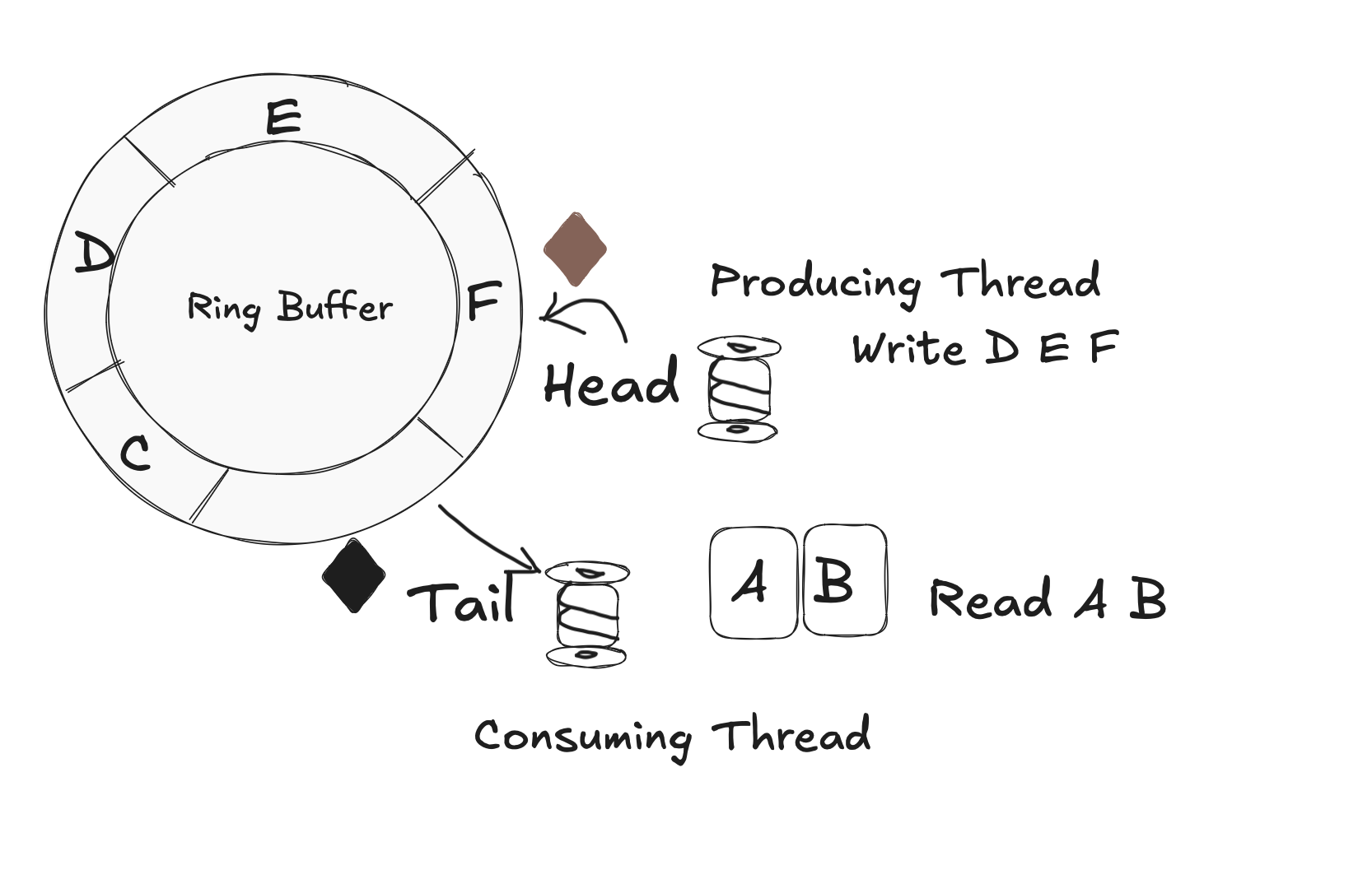
Understanding the Ring Buffer
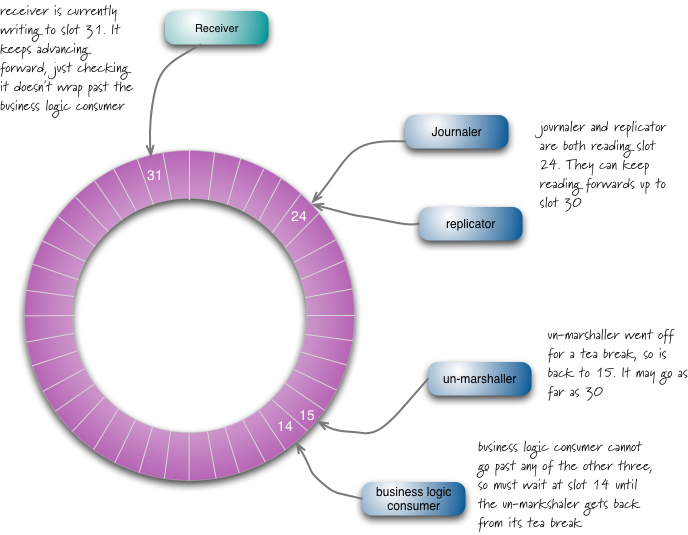

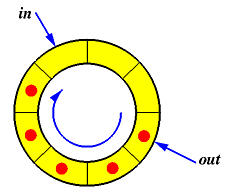
The ring buffer is a fixed-size circular data structure where:
- Producers publish events
- Consumers process events in sequence
Why it works well:
- No runtime memory allocation
- Better CPU cache utilization
- Predictable and consistent performance
Core Components of Disruptor
Event
A simple object representing the data being processed:
private long orderId;
}
Event Factory
Used to pre-allocate objects:
Ring Buffer
Central structure for storing events:
Event Handler
Consumes and processes events:
public void onEvent(OrderEvent event, long sequence, boolean endOfBatch) {
// processing logic
}
}
Producer
Publishes events into the ring buffer:
try {
OrderEvent event = ringBuffer.get(sequence);
event.setOrderId(123);
} finally {
ringBuffer.publish(sequence);
}
Designing for High Throughput
Single Writer Principle
Disruptor performs best when contention is minimized. A single producer model reduces synchronization overhead.
Wait Strategy Selection
Wait strategies define how consumers wait for new events.
| Strategy | Characteristics |
|---|---|
| BusySpin | Lowest latency, high CPU usage |
| Yielding | Balanced approach |
| Blocking | Lower CPU usage, higher latency |
Example:
Batch Processing
Processing events in batches improves throughput and cache efficiency.
// batch processing logic
}
Avoid False Sharing
False sharing can degrade performance. Disruptor internally handles padding, but awareness is important when designing adjacent data structures.
Pre-Allocation Strategy
Allocate all required objects upfront to:
- Reduce GC pressure
- Maintain predictable latency
Architecture Overview
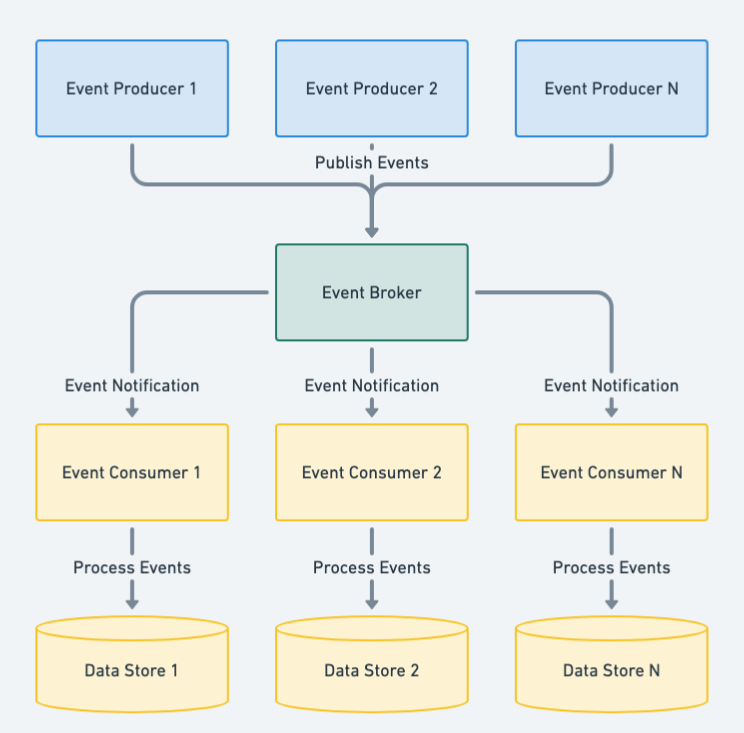
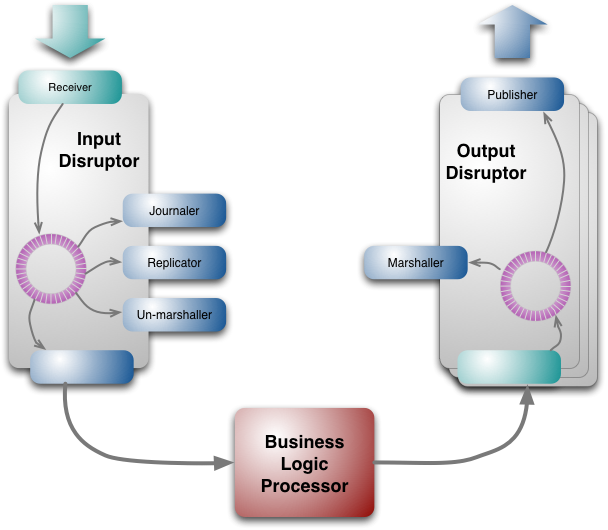
Flow:
- Producer publishes event
- Ring buffer stores event
- Consumers process events sequentially
- Results flow to downstream systems
Performance Advantages
| Metric | Traditional Queues | Disruptor |
|---|---|---|
| Latency | Higher | Ultra-low |
| Throughput | Moderate | Very high |
| GC Overhead | Significant | Minimal |
| Scalability | Limited | High |
When Not to Use Disruptor
Disruptor is not always the right choice. Avoid it when:
- System load is low
- Simpler solutions are sufficient
- Team lacks concurrency expertise
In such cases, traditional approaches may be more maintainable.
Real-World Use Cases
- High-frequency trading systems
- Real-time analytics pipelines
- Logging frameworks
- Messaging systems
Best Practices Summary
- Prefer a single producer where possible
- Choose the right wait strategy
- Minimize runtime allocations
- Monitor latency metrics such as P99 and P999
- Benchmark using realistic workloads
Final Thoughts
The Disruptor pattern introduces a fundamentally different approach to concurrency in Java. By leveraging lock-free design, memory pre-allocation, and CPU cache optimization, it enables systems to achieve exceptional throughput with consistent latency.
For engineers working on performance-critical applications, mastering this pattern can significantly elevate system efficiency and scalability.
References
- https://lmax-exchange.github.io/disruptor/
- https://martinfowler.com/articles/lmax.html
- https://github.com/LMAX-Exchange/disruptor
- https://mechanical-sympathy.blogspot.com/
- https://openjdk.org/

0 Comments