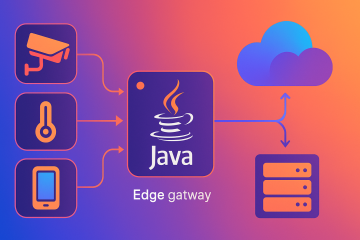
How to Use Feature Flags in Spring Boot for Safe Releases

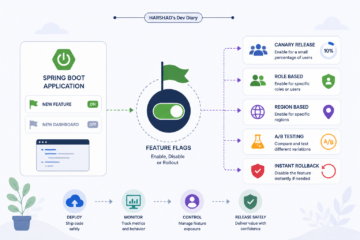
Modern software delivery requires teams to deploy faster while minimizing production risk. Traditional release strategies often couple deployment and feature release together, which creates significant operational challenges. A single faulty deployment can impact all users immediately, forcing emergency rollbacks and causing downtime. Feature flags solve this problem by allowing teams Read more
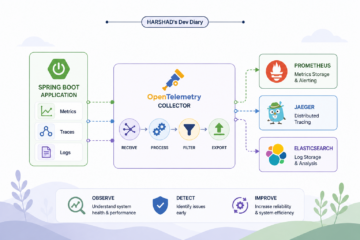
Spring Boot Observability: Metrics, Traces & Logs with OpenTelemetry Collector

Modern distributed systems are becoming increasingly complex. Microservices communicate across networks, asynchronous event-driven workflows span multiple services, and cloud-native environments scale dynamically. In such architectures, traditional debugging methods like checking application logs manually are no longer sufficient. This is where observability becomes essential. Observability helps engineering teams understand the internal Read more

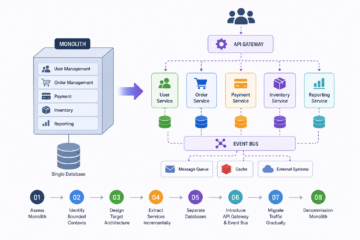
Migrating Monoliths to Microservices: A Step-by-Step Migration Blueprint

Many enterprise applications started as monoliths because monolithic architecture is simple to build, deploy, and manage during the early stages of product development. Over time, however, as teams grow and systems become more complex, monoliths often evolve into tightly coupled applications that are difficult to scale, maintain, and deploy efficiently. Read more

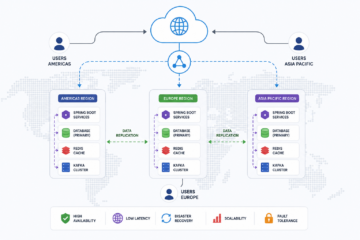
Building Multi-Region Spring Boot Systems for Global Availability

Modern applications are expected to remain available regardless of regional outages, traffic spikes, or infrastructure failures. Users accessing applications from different parts of the world also expect low latency and consistent performance. Traditional single-region deployments often struggle to meet these expectations because they introduce a single point of failure and Read more

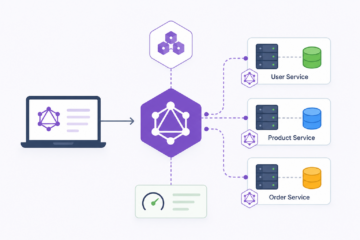
How to Build Federated GraphQL Microservices with Spring Boot

Modern microservice architectures often face a major challenge: managing APIs across multiple distributed services without creating tightly coupled systems. Traditional REST-based microservices can quickly become difficult to maintain because frontend applications frequently need to call several services to assemble a single response. Federated GraphQL solves this problem by allowing multiple Read more

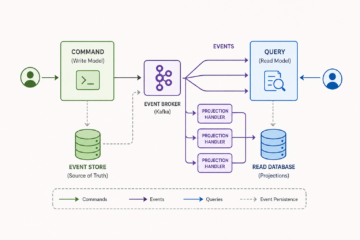
Implementing CQRS and Event Sourcing in Spring Boot

Modern enterprise applications often struggle with scalability, complex business workflows, and maintaining consistency across distributed systems. Traditional CRUD-based architectures become difficult to manage as applications evolve and business rules become more sophisticated. This is where CQRS (Command Query Responsibility Segregation) and Event Sourcing emerge as powerful architectural patterns. In this Read more

Audit Logging in Java Microservices: Techniques and Compliance Tips

Audit Logging in Java Microservices: Techniques and Compliance Tips

In the era of distributed systems, microservices introduce agility and scalability — but they also dramatically increase complexity in tracking user actions and system changes. Audit logging plays a crucial role in ensuring traceability, accountability, and compliance with regulations such as GDPR, HIPAA, PCI-DSS, SOX, and ISO 27001. In this Read more

API Rate Limiting & Throttling in Spring Boot with Bucket4j

API Rate Limiting & Throttling in Spring Boot with Bucket4j

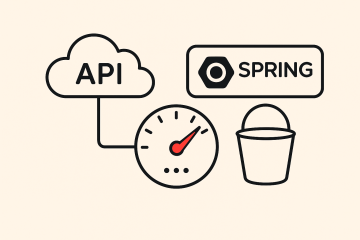
As modern systems continue to embrace microservices, public APIs, and high-volume traffic, controlling how consumers access APIs becomes critical. Without proper rate limiting, even a single misbehaving client can overwhelm your application—leading to degraded performance, increased latency, and potential downtime. Rate limiting and throttling safeguard your APIs by controlling the Read more

Integrating AWS SQS and SNS in Java Applications for Reliable Messaging

Integrating AWS SQS and SNS in Java Applications for Reliable Messaging

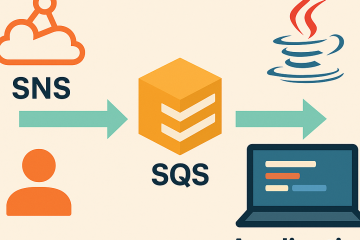
Modern distributed systems rely heavily on asynchronous communication to maintain resilience, scalability, and fault isolation. AWS offers two widely adopted managed messaging services—Amazon Simple Queue Service (SQS) and Amazon Simple Notification Service (SNS)—that simplify building event-driven architectures in Java applications. SNS enables pub/sub messaging with multiple subscribers, while SQS provides Read more